
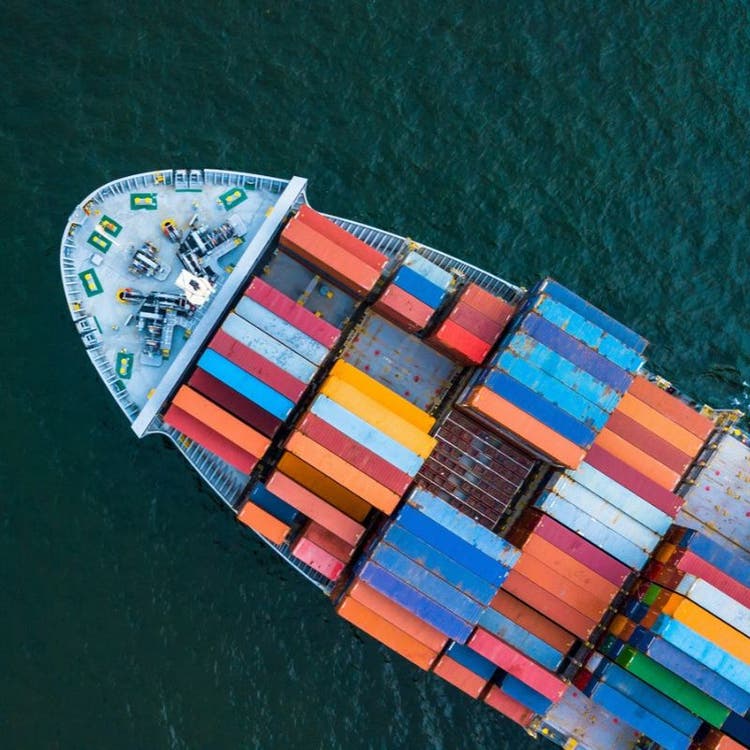
Today’s supply chain leaders optimize for agility, not efficiency
For decades, the Chief Supply Chain Officer's (CSCO) scorecard was built around a single idea: efficiency. Lean inventory, tight cost control, and predictable flows were the markers of a well-run supply chain. That model assumed a stable world that no longer exists.
Global supply chains have entered what the World Economic Forum calls an “era of structural volatility,” where disruption is not an exception to plan around but the operating environment itself. Marsh estimates that global supply chain disruptions now cost businesses $184 billion annually, and 65% of companies face at least one supply chain bottleneck. Efficiency alone cannot absorb that kind of pressure. The CSCOs who will define the next decade are the ones redesigning their supply chains around adaptability, not just cost.
Why efficiency alone is no longer a strategy
Efficiency optimizes for the plan you have. Agility optimizes for the plan you don’t have yet. That distinction matters more every year, because the assumptions that made lean, centralized, tightly coupled supply chains efficient — predictable demand, stable geopolitics, reliable partners — have largely disappeared.
The World Economic Forum's 2026 research found that 74% of supply chain leaders now view resilience as a driver of growth, not simply a risk-management exercise. That’s a meaningful shift in mindset: agility is no longer a defensive cost. It’s a competitive advantage. As Unilever’s Chief Supply Chain Officer, Marc Engel, put it:
“Every dollar we spent on agility has probably got a 10x return on every dollar spent on forecasting or scenario planning.”
That single line captures the strategic pivot underway. The CSCOs pulling ahead aren’t the ones with the most detailed forecast. They’re the ones who can absorb a surprise and keep moving.
The problem with planning for events
Most organizations still approach supply chain risk as an annual scenario-planning exercise: identify possible disruptions, assign probabilities, write a response, and file it away until next year. The trouble is that today’s disruptions rarely stay contained to a single event.
Consider the 2024 collapse of Baltimore’s Francis Scott Key Bridge. A single vessel strike closed a major port, forcing auto and manufacturing shipments to reroute through other facilities. That created congestion, higher transportation costs, longer transit times, and downstream pressure on production schedules, turning an infrastructure failure into a logistics, cost, and customer-delivery problem within days.
Events like this are precisely why McKinsey notes that scenario planning works best when it expands organizational thinking rather than trying to predict a single outcome. Leading logistics organizations, such as MSC, have already internalized this: the goal isn’t perfect prediction. It’s operational resilience achieved through agility.
Designing around capabilities, not scenarios
Rather than building hundreds of disruption scenarios, agility-minded CSCOs are asking a different question: What capabilities do we need regardless of what causes the next disruption? Across cyberattacks, extreme weather, geopolitical shifts, labor disruption, and supplier failure, the same core capabilities determine how fast an organization recovers:
- Continuous access to critical planning, ERP, and logistics systems, regardless of location
- Real-time visibility across suppliers, partners, and operations
- Secure collaboration with an extended ecosystem of vendors, contractors, and regulators
- Rapid onboarding of new suppliers, partners, or seasonal workers
- Flexible scaling of infrastructure and access as volume or conditions change
- Governance and control that holds up even as operations become more distributed
According to a 2025 survey of supply chain executives, 83% of leaders say supply chain resilience is now as important as cybersecurity for maintaining business operations, driving new investments in automation, real-time data, and AI. Organizations that improve coordination across people, processes, and systems are better positioned to adapt when disruptions occur.
Adaptability is a joint mandate with the CIO
Here’s the part many CSCOs underestimate: adaptability is not just an operational or organizational design question. It is a technology question. Supply chain agility depends on whether teams — employees, suppliers, contractors, and partners — can access the systems and data they need, regardless of what’s happening around them.
That puts the CIO squarely in the CSCO’s corner. When Atlantic Health System faced a major cyber incident with the CrowdStrike disruption, it maintained secure access for more than 15,000 users and recovered operations rapidly, a direct result of decoupling work from any single location, device, or network. That’s the same principle CSCOs need applied to supply chain operations: planning, procurement, and logistics teams that can keep working no matter where or how disruption strikes.
This is where a platform like Citrix plays a supporting role. Citrix doesn’t manage inventory, transportation, or supplier relationships; that’s the CSCO’s domain. What it does is give CIOs a way to operationalize agility: secure, consistent access to ERP, WMS, and logistics systems from anywhere; zero-trust access for suppliers and partners without expanding the network’s attack surface; and rapid onboarding of new users when conditions change quickly. It’s the digital foundation that lets a CSCO’s adaptability strategy actually function under pressure.
From forecasting for events to designing for adaptability
The organizations that perform best in volatile conditions won’t be the ones with the longest forecast or the thickest contingency-plan binder. They’ll be the ones that can absorb a surprise and keep serving customers while competitors are still figuring out what happened.
For the CSCO, that means shifting the scorecard itself, from cost per unit and forecast accuracy toward recovery time, supplier diversification speed, and the ability to onboard a new partner in hours rather than weeks. It also means treating the CIO not as a support function, but as a co-architect of resilience, since so much of that adaptability now runs through digital access, visibility, and governance.
Resilience is no longer just about protecting the business from disruption. For the CSCO who gets this right, it becomes the source of a durable competitive edge — the ability to keep moving, keep serving customers, and capture opportunity while everyone else is still adjusting to what just happened.
For more, check out our e-book: Supply chain resilience, efficiency, and agility in any market